I have spent a lot of my career building software for large organizations.
Some of that work was external, including projects for companies like Sony Pictures. A lot of it also involved internal tools and workflows.
That meant working with very different teams and figuring out how they actually operated.
One thing I learned pretty quickly was that the underlying principles of good software can stay consistent, but the workflow usually cannot. Trying to force every customer into the exact same process is a good way to make everyone miserable.
That lesson has carried directly into how we think about SkillSaige.
Different Organizations Work Differently
This sounds obvious until you start building software.
One organization may have a dedicated training team. Another may have HR handling training alongside ten other responsibilities. A university might have instructors, administrators, career services, and procurement all touching the same system in different ways.
The people using the platform may have completely different levels of technical comfort, but you can still build around the same core principles.
The system should be reliable. It should be understandable. It should make common tasks fast and reduce unnecessary work.
But the exact workflow that gets someone from idea to finished training may need to look different depending on who is using it.
Customization Should Not Mean More Work
This is where training platforms can get themselves into trouble.
“Customizable” sometimes means the customer gets access to every possible setting and is expected to figure the rest out.
Technically, that is flexibility.
Practically, it can just be transferring the work from the software’s designer to the customer.
If someone needs to understand prompt engineering, learn a complicated authoring system, or spend hours configuring basic training behavior, the platform may be powerful, but the workflow is doing too much.
Good software should absorb complexity where it can.
The customer should be focused on what they want to teach, what their learners need, and how the training should behave. The platform should handle as much of the technical translation as possible.
The Workflow Should Fit the Team
That does not mean every customer gets a completely different product. That would create a different kind of mess.
The goal is to build flexible systems with sensible defaults.
Some teams want a straightforward workflow where they can make a few changes and move on. Others want to get deeper into the details.
Some organizations may want to manage content directly. Others may want more support from us.
Those are all reasonable ways to use the same underlying platform. The important thing is not assuming that one workflow is automatically right for everyone.
This Is Something We Take Seriously
SkillSaige has a lot happening underneath the surface.
There is curriculum, roleplaying logic, feedback, analytics, customization, and the AI interchange layer supporting the experience.
The customer should not have to manage all of that complexity just because it exists.
Our job is to turn it into workflows that make sense for the people actually using the platform.
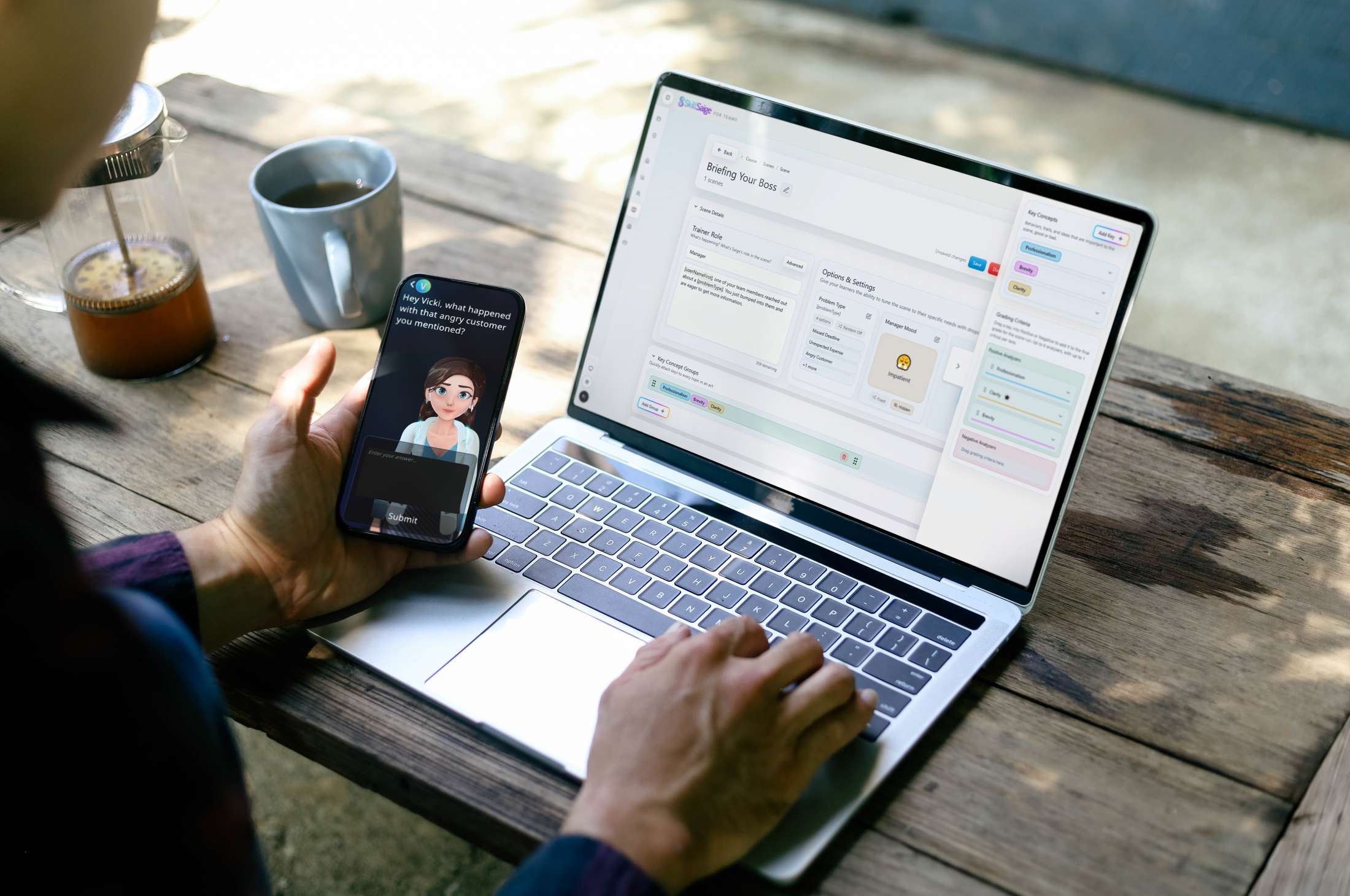
That might mean making common changes directly in a dashboard. It might mean giving more technical teams deeper options. It might mean working with an organization to build something bespoke.
The exact path can change. The principle does not.
Good training technology should make useful training easier to build.
It should not hand the complexity back to the customer and call that flexibility.
Is your training actually working?
Explore where your team training is working and where the biggest opportunities for improvement may be.